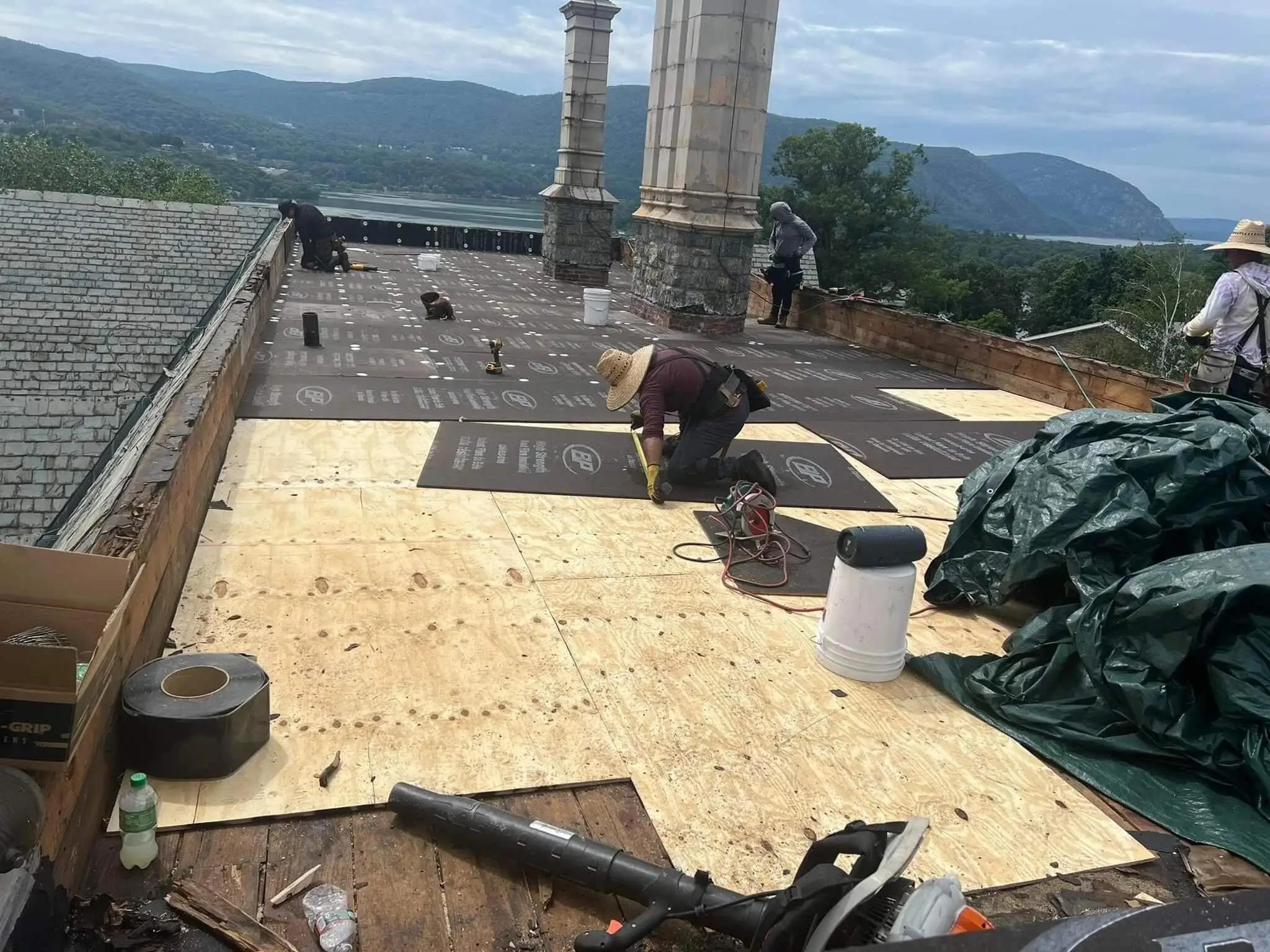
By Roofing Quality Plus Construction Corp | Syracuse, NY
A severe storm rolls through Syracuse. By morning, you’ve got missing shingles in the yard, a water stain spreading across your ceiling, and a knot in your stomach about what it’s all going to cost.
Here’s the good news: your homeowners insurance almost certainly covers sudden storm damage — wind, hail, falling trees, and ice-related damage are all standard covered perils under most New York HO-3 policies. But the key word is “almost.” Whether you receive a fair payout depends less on the damage itself and more on how you handle the claim.
This guide walks Syracuse homeowners through every step of the roof insurance claim process — from the moment the storm passes to cashing your final settlement check — and explains how partnering with the right roofing contractor can make a significant difference in the outcome.
Quick Stat
Most straightforward roof insurance claims take 30 to 60 days from initial filing to final payout. Complex or disputed claims can run 3 to 6 months. Following the steps in this guide puts you in the best position to stay in the faster lane.
Most standard HO-3 homeowners insurance policies in New York cover roof damage that is sudden and accidental — meaning it was caused by a specific event, not gradual wear and tear. Common covered causes include
High winds and nor’easters (very relevant for CNY’s winter and spring storm seasons)
Hail impact on shingles, flashing, or gutters
Falling tree limbs or debris landing on the roof
Ice dams and freeze-thaw damage causing sudden structural damage
Lightning strikes
What is typically NOT covered:
Gradual wear and tear, aging, or deferred maintenance
Mold, rot, or water damage from slow leaks that went unaddressed
Cosmetic damage only (dents without functional impairment) — some policies now exclude this
Pre-existing damage that predated the storm
Important for NY Homeowners
New York’s harsh winters mean ice dam damage is common — but coverage depends on whether the damage was sudden (usually covered) or resulted from a chronic drainage or insulation problem (often disputed). Document your roof’s maintenance history to protect yourself.
Before you pick up the phone to call your insurer, you need to know which type of coverage your policy provides. This single factor has the biggest impact on how much money you’ll actually receive.
|
ACV (Actual Cash Value) |
RCV (Replacement Cost Value) |
|
|
What you get |
Depreciated value of old roof |
Full cost of a new equivalent roof |
|
Payment |
One lump-sum check (minus deductible) |
Two checks: ACV first, remaining depreciation after repairs complete |
|
Out-of-pocket |
You pay the depreciation gap |
Only your deductible |
|
Best for |
Newer policies on budget; older roofs |
Most homeowners — better long-term protection |
|
Watch out for |
Major shortfall on older roofs |
Roof Payment Schedule (RPS) riders that secretly reduce payout |
Pro tip: Check your policy’s declarations page (the first page) for the words “replacement cost” or “actual cash value.” If you’re unsure, call your agent and ask directly before filing. Also ask whether your policy includes a Roof Payment Schedule (RPS) rider — an increasingly common endorsement that reduces payouts based on roof age even on policies that otherwise advertise RCV coverage.
NY-Specific Note
New York State does not prohibit ACV-only roof coverage, but your policy’s deductible structure matters. Wind and hail deductibles in NY are often a flat dollar amount rather than a percentage — but confirm this with your insurer, as percentage-based deductibles (e.g., 1–2% of your home’s insured value) can add up to several thousand dollars out-of-pocket.
Follow these steps in order. Missing or rushing any step is one of the most common reasons claims are underpaid or denied
- Prioritize safety — stay off the roof immediately after a storm
Do not attempt to inspect the roof yourself in the immediate aftermath of a storm. Wet or damaged roofing materials are hazardous. Survey visible damage from the ground and look for obvious signs: missing shingles, visible sagging, granules in gutters, water stains on ceilings, or daylight visible in the attic.
-
Document everything before touching anything
Before making any repairs or moving debris, photograph and video every inch of the damage. Date-stamped photos from multiple angles — ground level, attic interior, and any interior water stains — are your most important evidence. Take photos of the overall roof, close-ups of individual damaged areas, and any debris that indicates the storm’s impact (tree branches, hail stones on the ground, etc.). The more evidence you have that damage was sudden and storm-related, the harder it is for an insurer to attribute it to wear and tear.
-
Review your policy and note your deductible
Pull out your policy declarations page and confirm: (1) your deductible amount, (2) whether you have ACV or RCV coverage, (3) whether there is a specific wind or hail deductible, and (4) your claim filing deadline. Most NY policies require claims to be filed within a reasonable time after the loss — generally 30 to 60 days, though some policies specify shorter windows. Do not wait.
-
Contact your insurance company and file the claim
Call your insurer’s claims line or file online through their portal. Provide: your policy number, the date of the storm, a description of the damage, and confirm you’ve documented everything with photos. Ask for your claim number, the adjuster’s name and contact information, and the expected timeline for the inspection. Keep a written record of every phone call — date, time, representative name, and what was discussed.
-
Get a professional roof inspection from a licensed contractor — before the adjuster arrives
This step is critical and often skipped. A qualified roofing contractor will identify damage that insurance adjusters — who are generalists — commonly miss: compromised underlayment, damaged pipe boots, flashing failures, and structural decking damage that isn’t visible from a quick visual inspection. Ask the contractor to provide a written estimate and photo documentation you can submit alongside your claim. A GAF Certified contractor’s report carries particular weight with insurance companies.
-
Meet with the insurance adjuster — and have your contractor present
Request that your roofing contractor be present during the adjuster’s inspection. They can walk the adjuster through each damage point, answer technical questions, and ensure nothing gets overlooked. Adjusters work for the insurance company — a professional advocate on your side levels the field. Provide the adjuster with your photos, your contractor’s estimate, and any weather reports or local news coverage of the storm.
-
Review the settlement offer carefully — and negotiate if needed.
Compare the adjuster’s estimate with your contractor’s independent estimate. If there’s a significant gap, you can file a “supplement” — a formal request for additional payment covering items the adjuster missed. You have the right to dispute the settlement and request a re-inspection. If you’re unable to resolve the discrepancy, you can also hire a licensed public adjuster (at a cost of 10–15% of the claim) or consult a property insurance attorney. The New York Department of Financial Services (DFS) also has a consumer complaint process if you believe your insurer is acting in bad faith.
-
Complete repairs and collect your full settlement (RCV policies)
Once repairs are complete, submit your contractor’s final invoice to your insurer to receive the withheld recoverable depreciation — the second check that brings your total to the full replacement cost value. Do not skip this step. On RCV policies, this second payment can represent thousands of dollars. Keep copies of all invoices, permits, and correspondence until the claim is fully closed.
| Timeframe | What Happens |
| Days 1–3 | Document damage + file claim with insurer |
| Days 4–10 | Insurance adjuster schedules inspection |
| Days 11–20 | Adjuster prepares and submits damage report |
| Days 21–30 | Insurer reviews damage report and approves settlement |
| Days 31–45 | First settlement check (ACV) issued |
| Days 46–90 | Repairs completed; submit invoices to receive recoverable depreciation (RCV policies) |
| Complex claims | Disputes, engineering reviews, or appeals may extend the process to 3–6 months |
- Waiting too long to file
Many policies have strict filing deadlines — often 30 to 60 days from the date of the storm. Delay gives insurers grounds to question whether the damage was really from that storm event. File promptly, even if you’re still assessing the full scope of the damage.
-
Making permanent repairs before the adjuster inspects
Once you’ve repaired the damage, the adjuster can’t assess it. Temporary tarps and emergency measures are fine — and required. But do not replace shingles, patch the roof, or make structural fixes until the adjuster has documented the original damage.
-
Not having a contractor present during the adjuster visit
Insurance adjusters are generalists. A roofing contractor who works with GAF products and understands CNY’s specific weather conditions will identify damage that an adjuster walking a roof for 20 minutes simply won’t catch.
-
Accepting the first settlement offer without review
The first number is not necessarily the final number. Compare it to your contractor’s independent estimate. Supplements and appeals are normal parts of the process — don’t assume the adjuster’s number is correct.
-
Poor documentation
Undated photos, photos taken after temporary repairs, or no interior attic documentation can give the insurer ammunition to attribute damage to wear and tear rather than the storm. Document thoroughly before anything is touched
A knowledgeable, GAF-certified local contractor isn’t just for the repairs — they play an active role in maximizing your claim outcome:
Conducts a thorough inspection identifying all storm-related damage, including items adjusters commonly miss
Provides a detailed written estimate using industry-standard formats that insurers recognize
Accompanies you during the adjuster inspection to walk through every damage point
Files supplements on your behalf when the insurer’s estimate misses items
Understands upstate New York building codes and what repairs will actually pass inspection
Handles emergency tarping and temporary repairs to prevent additional damage and preserve your claim
Why Local Expertise Matters
A contractor familiar with Syracuse’s freeze-thaw cycles, ice dam patterns, and CNY-specific weather conditions will make a more compelling case to your adjuster than a storm-chasing contractor from out of state who doesn’t understand the local context.
After major storm events in the Syracuse area, door-to-door contractors — many from out of state — flood neighborhoods promising quick fixes and “guaranteed insurance approvals.” Be cautious of anyone who:
Asks you to sign over your insurance rights (assignment of benefits) before work begins
Promises to waive your deductible — this is insurance fraud in New York State
Demands full payment upfront before any work is done
Cannot provide a NY State contractor license number or proof of insurance
Pressures you to sign a contract on the spot without reviewing estimates
Red Flag Warning
In New York, waiving or absorbing a homeowner’s deductible is illegal. Any contractor promising to “cover your deductible” is asking you to participate in insurance fraud — which can result in claim denial and legal liability for you as the homeowner.
Most New York homeowners insurance policies require you to report a claim within a “reasonable” time after the damage occurs — typically 30 to 60 days. Some policies specify shorter windows. Check your policy declarations page immediately after a storm and file promptly, even if the full scope of damage is still being assessed.
Filing a claim can affect your premium at renewal, though the impact varies by insurer, your claims history, and the nature of the damage. Weather-related claims (wind, hail) typically have less impact on rates than claims attributed to homeowner negligence. Consult your agent before filing minor claims where the repair cost is close to your deductible — it may not be worth filing.
A denial is not the end. Request a written explanation of the denial, obtain an independent inspection from a licensed contractor, and file a formal appeal with additional documentation. You can also contact the New York Department of Financial Services (DFS) to file a complaint if you believe your insurer is acting in bad faith. For large or complex disputes, a property insurance attorney or licensed public adjuster may be warranted.
Absolutely — and they should. A qualified contractor can document damage for your claim, provide a detailed estimate in the format insurers require, accompany you during the adjuster inspection, and file supplements when the insurer’s estimate is incomplete. Choosing a GAF Certified contractor adds additional credibility, as insurance companies recognize GAF’s certification standards.
Roofing Quality Plus Construction Corp is a GAF Certified contractor serving Syracuse and the CNY area — available 24/7 for emergency roofing response. We offer free storm damage inspections, help you document damage for your insurance claim, and work alongside you and your adjuster to make sure nothing gets overlooked.
Don’t navigate a storm damage claim alone. Call us the moment you spot damage — the sooner we inspect, the stronger your claim documentation will be.
Storm Damage in Syracuse? We Can Help.
Roofing Quality Plus Construction Corp offers free storm damage inspections, helps you document damage for your insurer, and is available 24/7 for emergency roofing service.
Call or text us 24/7: +1 (315) 775-9205
info@roofingqualityplusconstructioncorp.com | 229 Meadowbrook Dr, Syracuse NY 13210