By Wilson Gualan, Founder — Roofing Quality Plus Construction Corp | Syracuse, NY GAF Certified Contractor · BBB Accredited · 15+ Years Serving Central New York
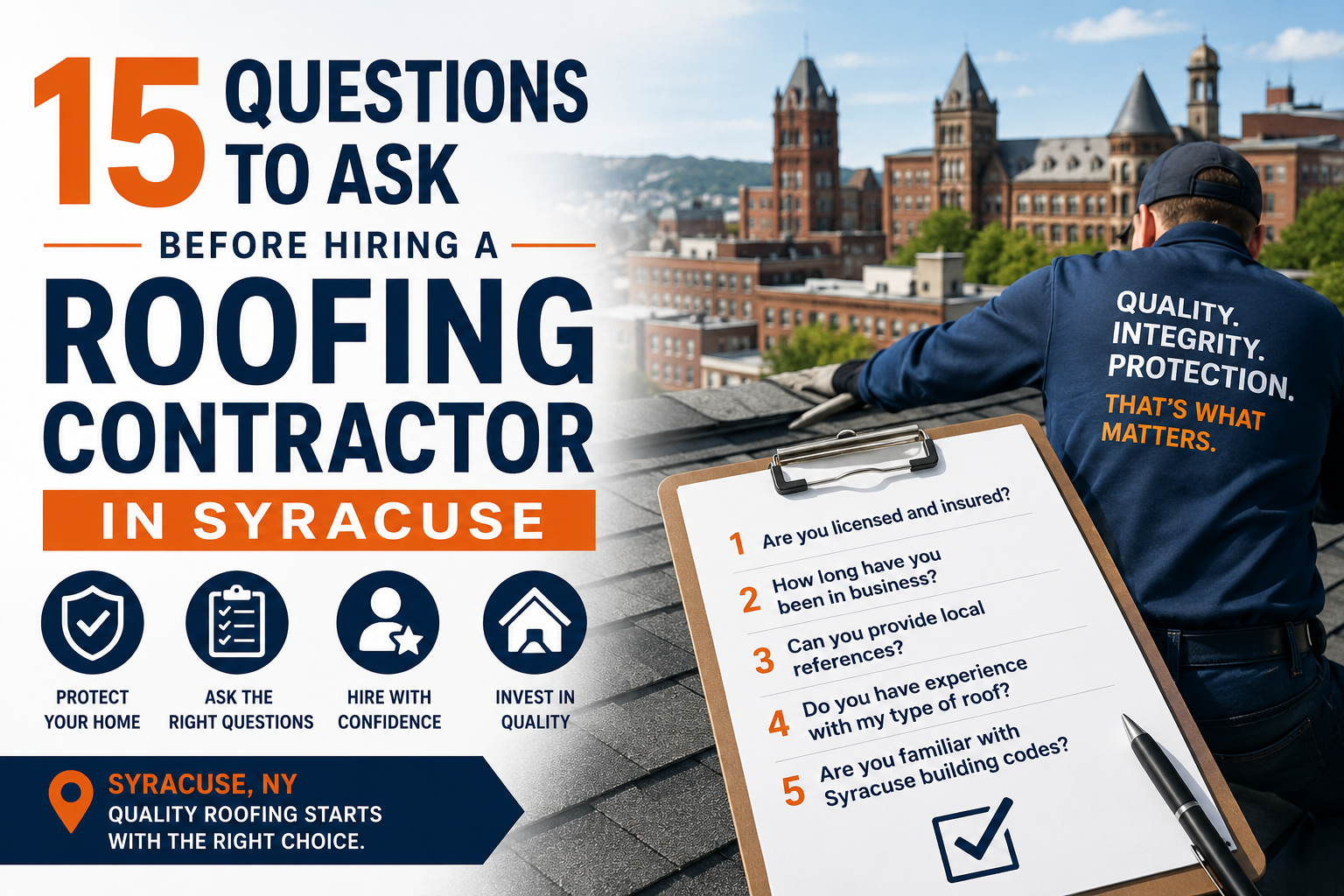
Before hiring any roofing contractor in Syracuse, NY, ask these 15 questions: (1) Are you licensed and insured in New York State? (2) Can you provide proof of workers’ compensation? (3) Are you a manufacturer-certified contractor? (4) How long have you operated locally in Syracuse? (5) Can you provide local references? (6) Do you offer a written labor warranty? (7) Will you provide a written, itemized estimate? (8) What materials will you use — exact brand, product line, and warranty class? (9) Who supervises the job on-site? (10) How do you handle unexpected damage discovered during work? (11) What does your cleanup process include? (12) Do you handle insurance claims? (13) What is your payment structure? (14) How long will the project take? (15) Will you pull the required permits? A contractor who answers all 15 clearly and in writing is one you can trust.
Syracuse is one of the most demanding roofing markets in the United States. With an average of 127 inches of annual snowfall, frequent freeze-thaw cycles, summer hailstorms, and a climate that tests every material in every season — roofing work done incorrectly here fails faster, causes more interior damage, and costs more to fix than in milder markets.
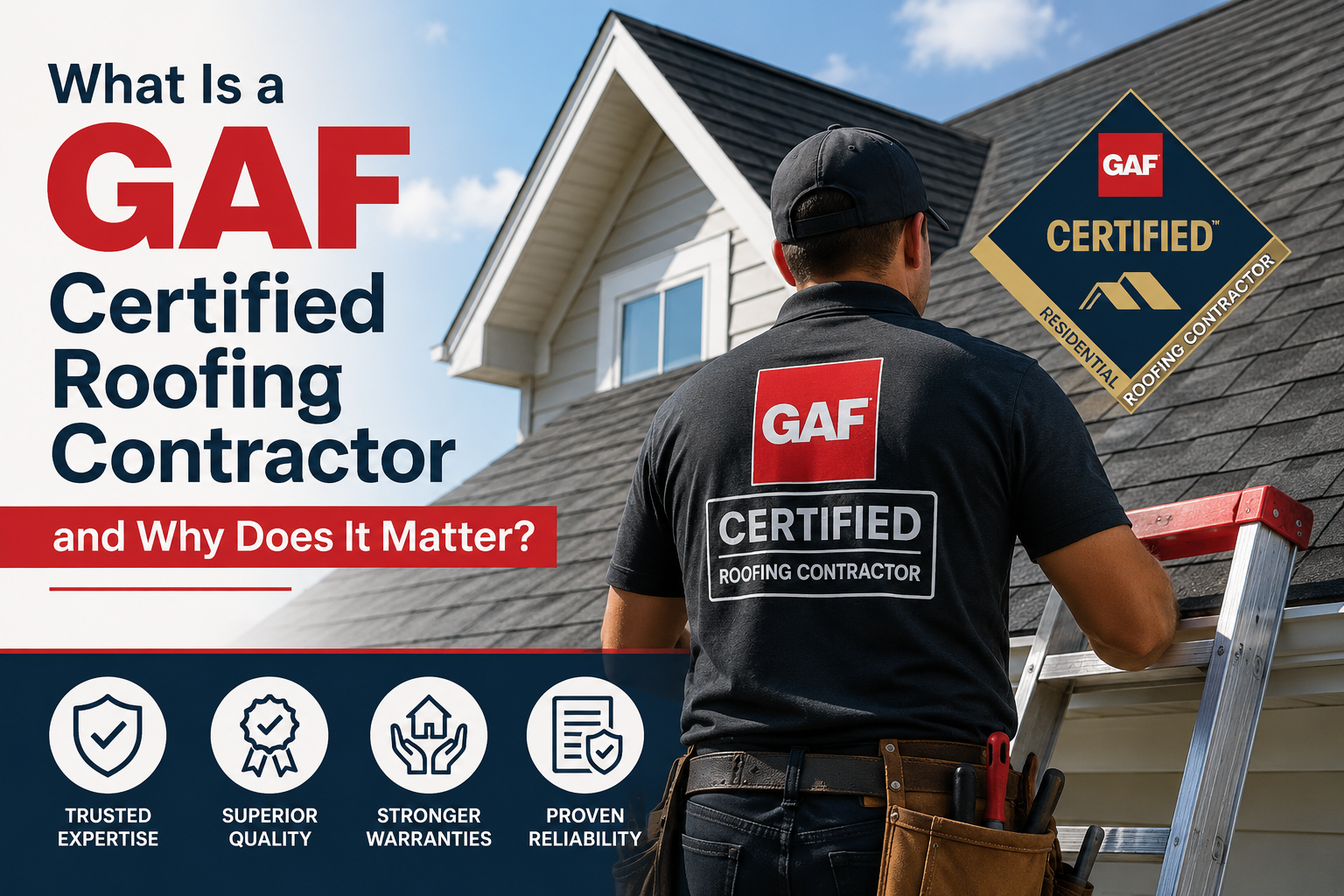
Every summer, the surge in roofing demand brings two types of contractors to Central New York: the experienced, accountable professionals who have been serving this community for years, and the opportunists — undercapitalized operations, storm chasers, and inexperienced crews looking to capitalize on seasonal volume. The difference between the two is not always obvious from a business card or a website. It is revealed through the answers to the right questions.
My name is Wilson Gualan. I founded Roofing Quality Plus Construction Corp and have been roofing in the Syracuse area for over 15 years. In that time, I have inspected and repaired the aftermath of bad roofing work from contractors who disappeared after cashing checks, left incomplete flashing installations, used substandard materials, and failed to pull permits — leaving homeowners with voidable warranties, failed inspections, and thousands of dollars in remediation costs.
This guide gives you the exact questions I would ask if I were hiring a roofing contractor for my own home — and what the right answers look like.
Question 1: Are you licensed to perform roofing work in New York State?
Why it matters: New York State requires roofing contractors to hold appropriate licensing to perform and contract work legally. Licensing requirements vary by municipality — the City of Syracuse, Onondaga County, and surrounding townships each have specific requirements. An unlicensed contractor leaves you exposed to liability and may void your homeowner’s insurance coverage if a claim arises from work they performed.
The right answer: A clear, immediate yes — followed by the license number and the jurisdictions it covers. A legitimate contractor has this information readily available because they deal with it on every permit application.
Red flag: Hesitation, vague answers about “being registered,” or claims that licensing “isn’t required for this type of work.”
Question 2: Can you provide a current certificate of insurance — including general liability and workers’ compensation?
Why it matters: This is the single most important document you should request before signing any contract. General liability insurance covers damage to your property caused during the job. Workers’ compensation insurance covers any worker injured on your property. Without workers’ compensation, you — the homeowner — may be held personally liable for medical costs and lost wages if a worker falls from your roof.
In a state with roofing fatality and injury rates as high as New York’s, this is not a theoretical risk. It is a real one that plays out in court cases across the state every year.
The right answer: An immediate offer to provide a certificate of insurance naming you as an additional insured, with no expiration date pressure and clear coverage limits. A legitimate contractor will proactively offer to send this document before you ask for it.
Red flag: Any contractor who cannot produce a current certificate of insurance within 24 hours, who claims their insurance “is in the truck,” or who asks you to trust their word on coverage.
Question 3: Are you a manufacturer-certified contractor — and which warranties can you offer in writing?
Why it matters: Manufacturer certification programs — particularly the GAF Certified Contractor program — require contractors to demonstrate verified installation expertise, maintain adequate insurance, and commit to ongoing professional development. Certified contractors can offer enhanced warranty packages, including extended material and workmanship warranties, that uncertified contractors cannot access regardless of the promises they make verbally.
As a GAF Certified Contractor, Roofing Quality Plus Construction Corp can offer the GAF System Plus warranty — including a 25-year color warranty against fading or discoloration and an optional 50-year extended coverage warranty. An uncertified contractor cannot offer these warranties even if they purchase and install the same GAF products.
The right answer: Confirmation of current manufacturer certification, the specific certifying manufacturer, and a written description of which warranty tiers they can offer on your project.
Red flag: A contractor who claims to install “premium materials” but cannot name a specific manufacturer certification or offer enhanced warranty documentation in writing.
Question 4: How long have you been operating in the Syracuse area — and can you show me a verifiable local business address?
Why it matters: A contractor’s longevity and local presence are among the strongest predictors of accountability and quality. A company that has operated in the Syracuse area for 10 or more years has a local reputation to protect — and local customers who can speak to their work. A contractor who arrived this season has nothing at stake if the job goes wrong.
Storm chasers — contractors who follow severe weather events from market to market — are a recognized industry problem. They appear in force after significant hail or wind events, move quickly to sign contracts, and frequently disappear before warranty issues arise. Their business model depends on volume and speed, not quality or accountability.
The right answer: A specific number of years operating locally, a verifiable physical address (not a P.O. box), and the ability to point to a Google Business profile with a significant history of local reviews.
Red flag: Vague answers about “being in the area,” a P.O. box address, no verifiable Google presence, or a company that cannot name the specific neighborhoods they have worked in across Central New York.
Question 5: Can you provide three references from recent jobs in the Syracuse area — and may I contact them directly?
Why it matters: A confident, quality contractor will have no hesitation providing references from recent local customers. More importantly, the willingness to provide references — and the quality of those references when you call them — tells you far more than any marketing material or online profile.
When you call references, ask specifically: Was the project completed on time and on budget? Was the crew professional and did they clean up thoroughly? Did the contractor communicate clearly throughout? Have you had any issues since the project was completed, and if so, how did the contractor respond?
The right answer: Three or more references provided without hesitation, with names and phone numbers you can actually call.
Red flag: A contractor who offers written testimonials instead of live references, who says references are “available upon request” but then delays providing them, or whose references cannot speak to recent work in the Syracuse area.
Question 6: What is your labor warranty — and what exactly does it cover in writing?
Why it matters: A roofing material warranty covers the product against defects. It does not cover installation errors — and installation errors are the leading cause of roof failures in Central New York. The vast majority of leaks, flashing failures, and premature shingle failures we diagnose trace back to how the roof was installed, not to the materials themselves.
A labor warranty is your protection against the contractor’s own workmanship. It says they stand behind how the work was done — not just what it was done with.
At Roofing Quality Plus Construction Corp, every project carries a 10-year labor warranty. This means if any installation-related issue arises within 10 years of our work, we come back and address it at no charge to you.
The right answer: A specific warranty period (not vague promises), a written description of what is and is not covered, and clarity on what process you follow to invoke the warranty if needed.
Red flag: A contractor who offers only a one-year labor warranty, who cannot describe the warranty terms clearly, or who gives a warranty verbally but will not put it in writing.
Question 7: Will you provide a written, itemized estimate before any work begins?
Why it matters: A handshake agreement or a single-line quote is not a contract — it is an invitation for misunderstanding, scope creep, and disputes. Before a single shingle is lifted on your property, you should have a written document that specifies exactly what work will be done, with what materials, to what standard, on what timeline, and at what total cost.
The right answer: Yes — immediately and without negotiation. The estimate should include: scope of work (tear-off vs. overlay, which sections are being addressed), material specifications (manufacturer, product line, color, warranty class), underlayment specifications, ice-and-water shield coverage zones, flashing details, ventilation work if applicable, disposal of old materials, project start date and estimated completion, payment schedule, and warranty terms.
Red flag: A contractor who provides a verbal quote and asks you to “trust the number,” who gives a vague written estimate without material specifications, or who adds language like “plus materials as needed” without defining what that means.
Question 8: What specific materials will you use — including manufacturer, product line, and warranty class?
Why it matters: Not all asphalt shingles are created equal. The difference between a builder-grade shingle and a premium architectural shingle can mean 8 to 12 years of additional lifespan in Syracuse’s climate. Some contractors quote “30-year shingles” and install the cheapest product that technically carries a 30-year warranty — a warranty that requires specific installation conditions most budget contractors do not meet.
The right answer: Specific, named materials. For example: “GAF Timberline HDZ architectural shingles, with GAF FeltBuster synthetic underlayment, GAF WeatherWatch ice-and-water shield at the eaves and valleys, and GAF Seal-A-Ridge cap shingles.” A contractor who knows their craft knows their materials by name.
Red flag: Generic descriptions like “quality shingles” or “standard materials,” inability to name the specific manufacturer or product line, or resistance to specifying materials in writing before the contract is signed.
Question 9: Who will be on the job site supervising the installation — and will subcontractors be used?
Why it matters: Many roofing companies in the Syracuse market subcontract installation work to crews they do not directly employ or consistently supervise. The company you hire may have excellent credentials and reviews — but if the actual installation is performed by a subcontracted crew that the company has no direct quality control over, those credentials provide limited protection.
The right answer: A named project supervisor or crew lead who will be present on your job site, clear information about whether subcontractors are used and how their work is supervised, and accountability that the company takes direct responsibility for the installation quality regardless of who performs it.
Red flag: Vague answers about who will actually be on the roof, acknowledgment that subcontractors are used without clear explanation of how quality is supervised, or a company representative who cannot name the specific crew lead for your job.
Question 10: How do you handle unexpected damage discovered during the project — and will you notify me before proceeding with additional work?
Why it matters: Roofing projects frequently uncover issues that were not visible during the initial estimate — decking rot, deteriorated insulation, structural damage from ice dams, pest infiltration. How a contractor handles these discoveries tells you a great deal about their integrity and their respect for your budget.
The right answer: A clear process: the contractor stops work, documents the unexpected damage with photographs, presents you with a written change order describing the additional scope and cost, and waits for your explicit approval before proceeding. No legitimate contractor adds scope or cost to a project without documented authorization from the homeowner.
Red flag: A contractor who describes a vague “we’ll handle whatever we find” approach, who mentions additional charges only after the work is complete, or who has no formal change order process.
Question 11: What does your cleanup process include — specifically for nails and fasteners?
Why it matters: A roofing project generates hundreds — sometimes thousands — of loose fasteners. A nail embedded in a car tire or stepped on by a child in bare feet is a real consequence of inadequate cleanup. Professional roofing contractors use magnetic nail sweepers (rolled over the yard and driveway multiple times) and perform a systematic job-site walkdown before leaving your property.
The right answer: A description of the specific cleanup process: debris removed from the roof and contained, a minimum of two passes with a magnetic nail sweeper across all yard and driveway areas, removal of all packaging and waste materials, and a final walkthrough with you before the crew leaves.
Red flag: A contractor who gives a vague assurance that “they always clean up” without describing specific process, or who cannot explain what tools they use for fastener collection.
Question 12: Do you handle insurance claims — and do you work with public adjusters?
Why it matters: This question separates roofing companies that are true full-service partners from those that simply install shingles. If your roof has been damaged by wind, hail, or wildlife, your homeowner’s insurance may cover 100 percent of the repair or replacement cost — and you only pay your deductible.
Many homeowners don’t pursue legitimate insurance claims because they fear the process, fear premium increases, or simply don’t know they’re entitled to coverage. A roofing contractor who handles the claims process on your behalf — working directly with your insurance company and partnering with licensed public adjusters who specialize in negotiating maximum settlements — delivers dramatically more value than one who only shows up after the check is cut.
At Roofing Quality Plus Construction Corp, we guide homeowners through the entire insurance claims process. We document the damage, work directly with your insurance adjuster, and partner with licensed public adjusters to ensure you receive every dollar your policy entitles you to. Covered damage includes wind, storm, hail, and wildlife damage to roofing, siding, and gutters. Importantly, under applicable New York law, weather-related damage claims do not affect your policy’s value or premium.
The right answer: Yes — a full description of how they handle claims, who they partner with, and what their process looks like from inspection through settlement.
Red flag: A contractor who has no claims experience, who tells you to “handle the insurance side yourself,” or who is unfamiliar with public adjusters.
Question 13: What is your payment structure — and do you require a large deposit?
Why it matters: Payment terms reveal risk posture. A professional contractor has established supplier relationships and access to materials credit — they do not need a large percentage of your total contract price before work begins. A contractor who demands 50 percent or more upfront is either financially unstable, planning to use your deposit to fund another job, or — in the worst cases — planning to disappear.
The right answer: A deposit of 10 to 30 percent to secure scheduling and materials, with the balance due upon completion and your satisfaction. Some larger commercial projects may have milestone-based payment schedules, which are legitimate — but the final payment should always occur after the work is complete and you have conducted a walkthrough.
Red flag: Cash-only payment requirements, requests for more than 30 to 40 percent upfront, requests for full payment before work begins, or pressure to pay quickly without a written contract in place.
Question 14: What is the realistic project timeline — including start date, completion date, and any weather-contingency plan?
Why it matters: Vague timelines create frustration and are a sign of poor project management. A professional contractor schedules work in advance, communicates clearly about start dates, and has a defined process for handling weather delays — which are inevitable in Central New York.
The right answer: A specific start date, a realistic completion window based on the scope of work, and a clear explanation of what happens if weather delays the project — including how you will be notified and how the schedule adjusts.
Red flag: Contractors who say they can “start immediately” without a clear explanation of how your job fits into their existing schedule, or who give a completion date that seems unrealistically fast given the scope of work.
Question 15: Will you pull all required permits for this project?
Why it matters: In the City of Syracuse and across Onondaga County, roofing permits are required for full replacements and significant structural repairs. Permits exist to protect homeowners — they trigger inspections that verify the work was done to code, they create a public record of the work for future home sales, and they ensure your homeowner’s insurance coverage remains valid.
Some contractors suggest skipping permits to save time or money. This is never in your interest as a homeowner. An unpermitted roof replacement can create complications when you sell the home, may void your homeowner’s insurance coverage on that structure, and leaves you with no code-compliance verification.
The right answer: Yes — an unequivocal commitment to pull all required permits for your project, including familiarity with the specific permit requirements for your municipality in the Syracuse area.
Red flag: Any suggestion that permits are unnecessary, optional, or can be “handled later,” or a contractor who frames permit skipping as a cost-saving benefit to you.
The Contractor Evaluation Scorecard
Use this simple scorecard when evaluating contractors in Syracuse. A legitimate, professional roofing contractor should answer yes to all 15 questions — clearly, completely, and in writing.
|
Question |
Must answer YES |
Verified in writing |
|
Licensed in NY State |
✓ |
✓ |
|
Proof of insurance (GL + WC) |
✓ |
✓ |
|
Manufacturer certified |
✓ |
✓ |
|
5+ years local operation |
✓ |
✓ |
|
Local references provided |
✓ |
✓ |
|
Written labor warranty (5+ years) |
✓ |
✓ |
|
Written itemized estimate |
✓ |
✓ |
|
Specific materials named |
✓ |
✓ |
|
Named on-site supervisor |
✓ |
✓ |
|
Change order process defined |
✓ |
✓ |
|
Specific cleanup process |
✓ |
✓ |
|
Handles insurance claims |
✓ |
✓ |
|
Deposit ≤30% of total |
✓ |
✓ |
|
Specific project timeline |
✓ |
✓ |
|
Pulls required permits |
✓ |
✓ |
Any contractor who cannot answer yes to every item on this list — or who answers yes verbally but resists putting it in writing — is a contractor worth reconsidering.
Red Flags That Should End the Conversation Immediately
Beyond the 15 questions, certain behaviors should end your engagement with a contractor outright:
Door-to-door solicitation after storms. Legitimate roofing companies with established local reputations do not knock on doors uninvited, especially immediately after storm events. This is a defining characteristic of storm chasers.
No verifiable online presence or local reviews. A contractor operating in the Syracuse area for any meaningful period should have a Google Business profile with a history of verifiable local reviews. The absence of this is not a neutral signal — it is a warning.
Pressure to sign immediately. “This price is only good today” and “I have another job lined up” are manipulation tactics designed to prevent you from getting competitive quotes or doing due diligence. Legitimate contractors do not use them.
Reluctance to provide any document before contract signing. Insurance certificates, license numbers, references, and material specifications should be available without any hesitation. A contractor who treats these requests as obstacles is hiding something.
Offering to let you keep the insurance check. Some fraudulent contractors offer arrangements where they perform less work than was approved in your insurance claim and split the difference with you. This constitutes insurance fraud in New York State, and the homeowner — not just the contractor — faces legal liability.
Why Roofing Quality Plus Construction Corp Answers All 15 Questions
I’m sharing this guide not just as a resource for Syracuse homeowners but as a direct statement about how Roofing Quality Plus Construction Corp operates.
We are a GAF Certified Contractor — one of a select group in Central New York with verified manufacturer certification. We carry full general liability and workers’ compensation insurance on every project. We have operated continuously in the Syracuse area for 15+ years, with a verifiable local address, a documented history of local reviews, and hundreds of completed projects across Onondaga County and surrounding communities.
Every project we undertake comes with a written, itemized estimate; a named on-site supervisor; specific material specifications; a formal change order process; magnetic nail sweep cleanup; and a 10-year labor warranty backed in writing. We pull required permits. We handle insurance claims from inspection through settlement, partnering with licensed public adjusters to ensure our clients receive full coverage.
We answer yes to all 15 questions — and we put every answer in writing.
The most important question is whether they carry current workers’ compensation insurance — and whether they can provide a certificate of insurance immediately. If a worker is injured on your property and the contractor lacks workers’ comp, you may face personal liability for medical costs. This is the non-negotiable first screen for any roofing contractor you consider hiring in New York State.
You can verify contractor licensing through the New York State Department of Labor website and through the City of Syracuse’s Department of Neighborhood and Business Development for city-specific licenses. Additionally, request the contractor’s license number in writing and verify it yourself before signing any contract.
A roofing contract in New York should include: full scope of work, specific materials with manufacturer and product names, warranty terms for both materials and labor, payment schedule, project timeline, permit responsibilities, change order process, and cleanup commitments. New York State consumer protection law requires home improvement contractors to provide written contracts for work exceeding $500.
A reasonable roofing deposit in the Syracuse market is 10 to 30 percent of the total project cost. This secures your scheduling slot and covers initial material procurement. Any request for more than 30 to 40 percent upfront — and especially any request for full payment before work begins — should be treated as a significant warning sign.
Yes. The City of Syracuse and Onondaga County require permits for full roof replacements and significant structural repairs. Your contractor should pull the permit as part of the project — not suggest skipping it. Unpermitted work can create complications at home sale, void insurance coverage, and leave you without code-compliance verification.
GAF maintains a certified contractor locator at gaf.com where you can search by zip code. Roofing Quality Plus Construction Corp is a GAF Certified Contractor serving the greater Syracuse area. GAF Certified contractors can be identified by their certification documentation and their ability to offer GAF’s enhanced warranty tiers, including the System Plus and Golden Pledge warranties.
A public adjuster is a licensed professional who represents the homeowner — not the insurance company — in negotiating an insurance settlement. They specialize in maximizing the payout on legitimate claims, particularly for storm, wind, hail, and wildlife damage. In New York, public adjusters are licensed by the Department of Financial Services. Roofing Quality Plus partners with licensed public adjusters to ensure our clients receive full coverage on qualifying insurance claims.
Most residential roof replacements in Syracuse take one to three days depending on home size, roof complexity, and weather conditions. Roofing Quality Plus completes the majority of standard single-family home replacements in one to two days, including full cleanup. Commercial projects and complex multi-section roofs may require additional time.
Ask specifically: Do you use a magnetic nail sweeper, and how many passes do you make? How do you contain and remove old shingle debris? Do you do a final walkthrough with the homeowner before the crew leaves? A contractor with a professional cleanup process will describe it specifically. Vague assurances that they “always clean up” are not sufficient.
Yes. Roofing Quality Plus guides homeowners through the entire insurance claims process — from initial damage documentation through insurance company coordination and final settlement. We partner with licensed public adjusters to ensure our clients receive full coverage for wind, hail, storm, and wildlife damage to roofing, siding, and gutters. Under applicable New York law, weather-related damage claims do not affect your policy’s value or premium. Call us at (315) 775-9205 for a free damage assessment.
Get a Free Consultation With Syracuse’s Most Trusted GAF Certified Roofer
If you are currently evaluating roofing contractors in Syracuse and want to see exactly how Roofing Quality Plus Construction Corp answers these 15 questions — in person, in writing, and without pressure — we invite you to schedule a free consultation and roof assessment.
Wilson Gualan and his team have served the Syracuse community for 15+ years. We will answer every question on this list completely and in writing, provide a detailed itemized estimate at no cost, and give you an honest recommendation — whether the right answer is a minor repair, a targeted maintenance plan, or a full replacement.
📞 Call or text: +1 (315) 775-9205
Roofing Quality Plus Construction Corp is a GAF Certified contractor and BBB-accredited business founded by Wilson Gualan, proudly serving Syracuse, NY and surrounding Central New York communities for 15+ years. Services include residential and commercial roofing installation, repair, replacement, guttering, siding, and complete insurance claim guidance.